
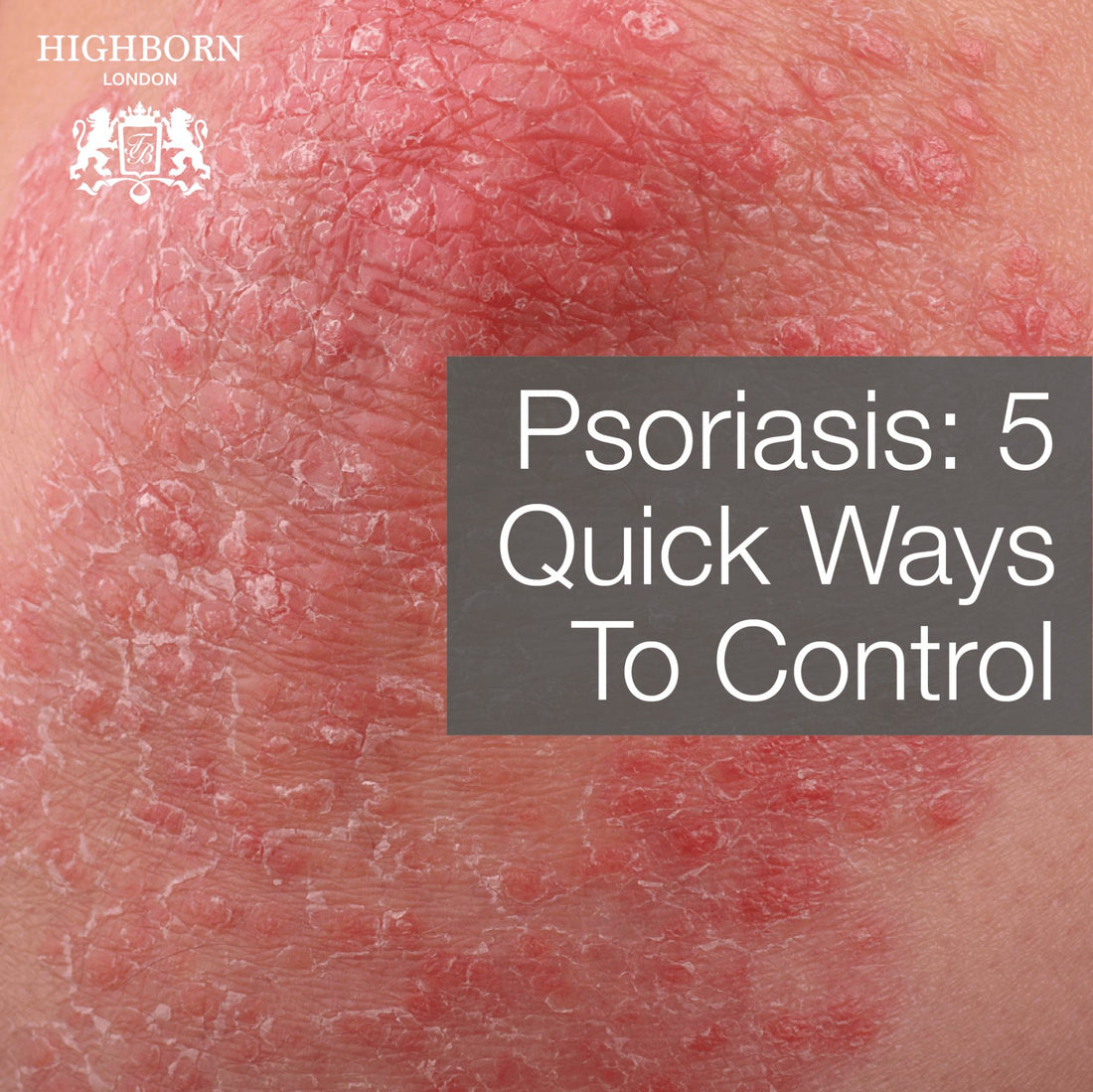
5 Quick Fixes To Avoid Psoriasis Flare-Ups

Psoriasis: tricky to spell, even harder to manage. But there is some good news, because there are many simple ways to reduce redness, flaking, itching and all the other trying symptoms that come with psoriasis flare-ups….
Everyday skin care can support comfort alongside the treatment plan agreed with your clinician.
Of course, a proper diagnosis and treatment plan from your GP is the most important step when dealing with psoriasis – or indeed any skin disorder. Then, and only then, should you look at your skincare and lifestyle habits and adjust accordingly.
But first, what exactly is psoriasis?
Psoriasis is a skin condition that affects around 2 percent of the UK population which, granted, might not sound like a lot, but actually equates to more than a million sufferers. It occurs equally between men and women and can appear at any age, although it usually develops before the age of 35.
While its exact cause is a little unclear (genes are partly to blame), psoriasis is an autoimmune condition in which your T-cells mistakenly attack healthy skin cells, forcing your skin to produce new cells quicker than normal. Instead of having a regular turnover time of around four weeks, a psoriasis sufferer’s skin cells turn over in as little as three or four days, causing build-up on the surface, along with flaking, redness, scaling and irritation.
Psoriasis symptoms occur most often on the scalp, knees, elbows, hands and feet but they can appear anywhere and come and go depending on various environmental or lifestyle factors. This is why, after a professional diagnosis has been made, you should try to identify your triggers to help avoid flare-ups. Common ones include alcohol, stress, hormones and smoking, so keep a diary and start with these obvious suspects.
Here are five practical areas to discuss with your GP or dermatologist.
1. Avoid Sulphates In Your Skincare
Look for skin-care products you tolerate. Fragrance and some cleansing ingredients can irritate; “natural” is not a guarantee that a product will suit you.
Ask your pharmacist or clinician for help choosing a suitable cleanser or emollient.
2. Prevent Dry Skin
Avoid routines that leave skin dry or uncomfortable. Follow the emollient advice from your care team.
Use the emollient recommended for you, including after washing. HIGHBORN cosmetics are not treatments for psoriasis.
3. Wear Light, Cotton Clothes
Heavy woollen clothing or other thick fabrics will do nothing for your psoriasis because they hold sweat against your skin which can be uncomfortable and cause you to itch. Seriously bad news. And this will be ten times worse if you like to wear tight clothing. You have been warned.
Instead, choose light, ‘breathable’ fabrics like cotton, silk and cashmere and wear loose clothing, especially around areas where your flare-ups are most common.
4. Watch What You Eat
A balanced diet supports general health. If you suspect a food affects your symptoms, discuss it with your clinician rather than cutting out whole food groups on your own.
5. Ask about light treatment
Phototherapy is a medical treatment delivered under specialist supervision. Do not prescribe yourself a number of minutes of sun exposure as psoriasis treatment.
Protect your skin from sunburn and ask your clinician how to manage sun exposure with your treatment.
Your next useful step
Including questions during or after treatment. Begin with comfort, check ingredients and know when to ask for individual advice.
Follow my guided path →Keep your two-minute routine handy
Open the free printable morning & evening routine →
For practical care notes, new Journal guides and HIGHBORN offers by email, join Tracey's list below.